Oral Surgery
Bone Grafting
Procedure Description
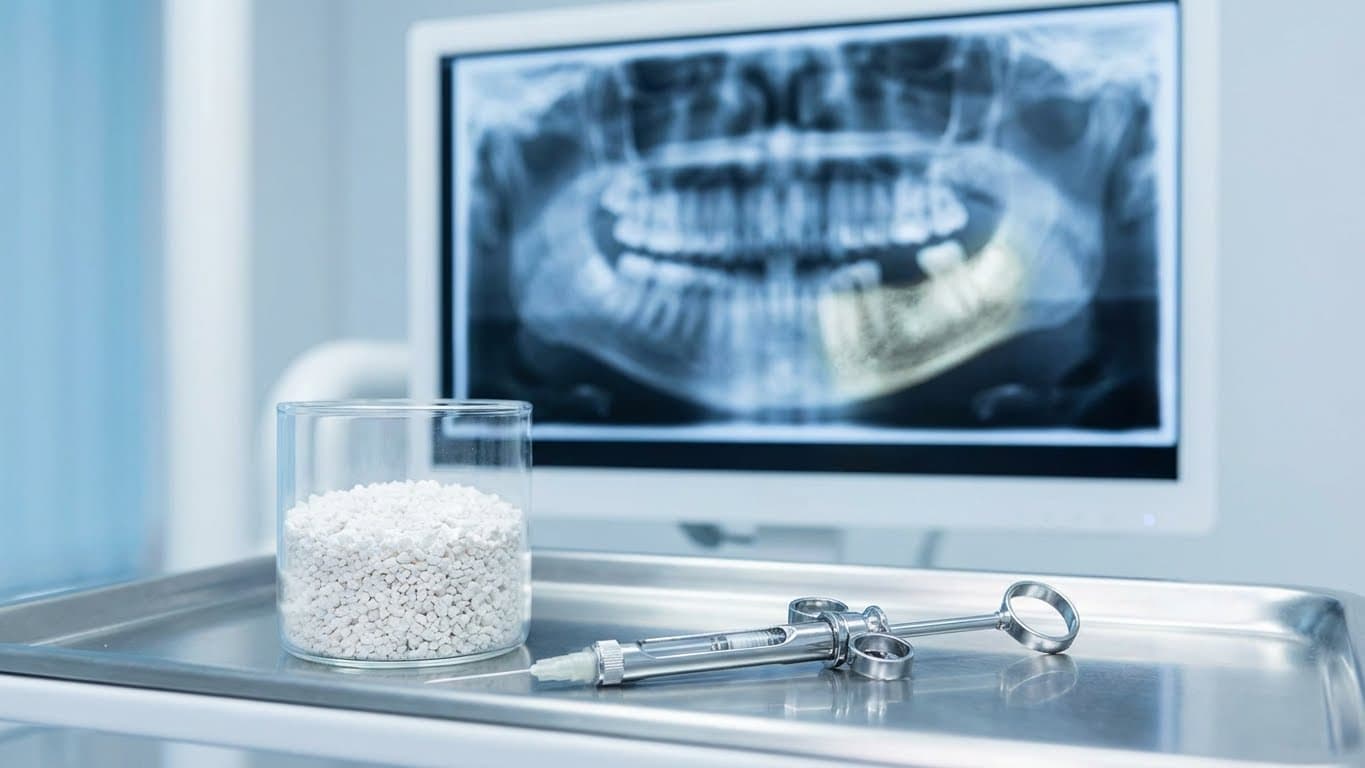
Bone grafting is a procedure performed after tooth extraction to preserve and strengthen the jawbone. When a tooth is removed, it leaves behind an extraction socket—the hole where the tooth's root once resided. Without intervention, this area naturally loses bone volume over time. Our experienced dentists place bone graft material into the extraction socket immediately after removal to maintain the bone structure and prepare the site for future restorative options, particularly dental implants.
Tooth Extraction
The damaged or problematic tooth is carefully removed, leaving behind the extraction socket.
Socket Preparation
The extraction socket is thoroughly cleaned and prepared to receive the bone graft material.
Bone Graft Placement
Bone graft material is carefully placed into the extraction socket to fill the void and provide a scaffold for new bone growth.
Membrane Coverage
A protective membrane is placed over the bone graft to shield it and guide proper tissue regeneration.
Suturing
Gum tissue is sutured over the area to protect the graft site and promote healing.
Indications
Bone grafting is recommended in several situations to ensure optimal oral health outcomes:
When to Consider Bone Grafting
Post-Extraction Preservation
Immediately after tooth extraction to prevent natural bone resorption and maintain socket dimensions.
Dental Implant Preparation
When planning for a future dental implant, bone grafting ensures sufficient bone volume and density for successful implant placement.
Bone Loss from Periodontal Disease
Patients who have lost bone due to advanced gum disease may require grafting to rebuild the foundation for teeth or implants.
Immediate Implant Support
For an immediate implant to succeed, there must be enough bone past the apex of the root to ensure the implant's stability.
Note: Not all extractions require bone grafting. Our dentists will evaluate your specific situation and discuss whether bone grafting is necessary based on your future treatment goals.
Benefits
Why Choose Bone Grafting?
Prevents Bone Loss
Limits the natural bone resorption that occurs after tooth extraction, preserving your jawbone structure.
Prepares for Dental Implants
Creates stable, thick bone suitable for successful dental implant placement approximately three months after the procedure.
Maintains Facial Structure
Preserving bone volume helps maintain your natural facial contours and prevents the sunken appearance associated with bone loss.
Expands Treatment Options
By preserving bone, you maintain eligibility for various tooth replacement options including implants, bridges, and dentures.
Single Procedure Efficiency
Bone grafting can often be performed at the same time as tooth extraction, reducing the number of appointments needed.
Alternatives
Extraction Without Grafting
Simple extraction allowing natural healing, though significant bone loss may occur over time
Immediate Dental Implant
In some cases, an implant can be placed immediately after extraction without separate bone grafting
Ridge Augmentation
A more extensive bone grafting procedure performed after bone loss has already occurred
Dental Bridge
A tooth replacement option that doesn't require implants and may not need bone grafting
Frequently Asked Questions
Related Services
Locations Offering Bone Grafting
Available at all Philadelphia Dental locations throughout Philadelphia
Schedule a Consultation
Ready to learn more about this treatment? Contact us today.
Book Appointment