General & Family Dentistry
Root Canal Treatment
Procedure Description
A root canal procedure may be necessary to treat an infection caused by a deep cavity that affects the tooth's blood and nerve supply. When decay penetrates deep enough to reach the dental pulp, it can cause severe pain and requires specialized treatment to save the tooth.
Accessing the Root Canals
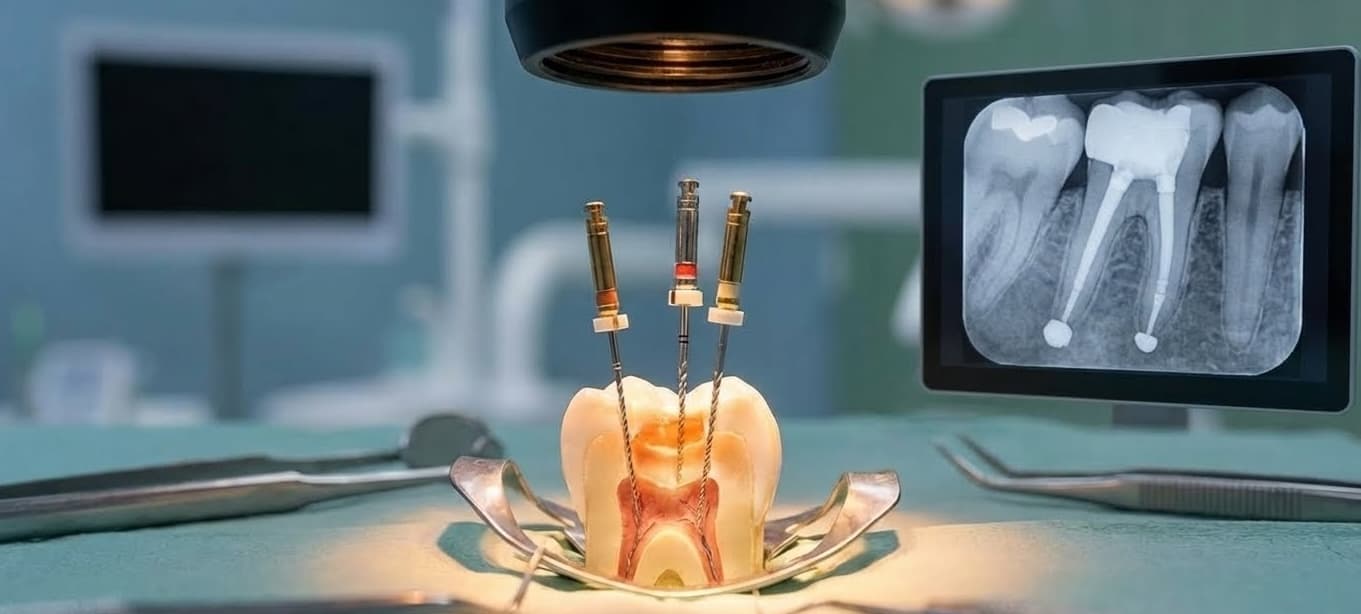
The procedure begins by gaining access to the root canals from the crown (top) of the affected tooth. This allows our dentists to reach the infected pulp tissue inside.
Removing Infected Tissue
All decayed and infected tissue is carefully removed from the tooth's interior, eliminating the source of infection and pain.
Cleaning and Disinfecting
Each tiny canal is identified, cleaned, and disinfected using small, narrow instruments called files. This ensures complete removal of bacteria.
Shaping the Canals
The canals are further prepared using rotary instruments to open them to a precise taper and length, ensuring optimal filling and sealing.
Sealing with Gutta-Percha
A flexible plastic material called gutta-percha is used to fill and seal each canal, protecting it from damaging bacteria and preventing reinfection.
Reinforcing with Posts
To add structural stability, the canal spaces are prepared for the placement of reinforcing posts. The posts are carefully placed and a dense filling material is inserted into the tooth cavity.
Restoring the Tooth
The core filling is reshaped to resemble the biting surface and cured to hardness using a specialized blue light source. A dental crown is highly recommended to complete the restoration.
Root Canal Procedure
When You Need a Root Canal
Root canal treatment becomes necessary when infection reaches the inner pulp of your tooth. Early treatment is essential to save the tooth and prevent the spread of infection:
Severe Tooth Pain
Deep, persistent pain that may worsen when biting or applying pressure, often indicating that infection has reached the nerve.
Deep Cavity or Decay
When tooth decay penetrates through the enamel and dentin to reach the pulp chamber containing blood vessels and nerves.
Prolonged Sensitivity
Lingering sensitivity to hot or cold temperatures that persists long after the stimulus is removed.
Abscess or Swelling
Swelling in the gums near the affected tooth, facial swelling, or a pimple-like bump on the gums indicating infection.
Tooth Discoloration
Darkening of the tooth, which may indicate that the pulp inside has died due to infection or trauma.
Note: Depending on the severity of the infection, you may experience varying levels of pain and may require more than one visit to complete the treatment, not including follow-up appointments.
Benefits of Root Canal Treatment
Why Save Your Natural Tooth?
Pain Relief
Root canal treatment eliminates the source of infection and pain, providing significant relief from the severe discomfort caused by an infected tooth.
Save Your Natural Tooth
Preserving your natural tooth maintains your natural bite, protects other teeth from excessive wear, and keeps your natural smile intact.
Prevent Infection Spread
Removing the infected pulp prevents the infection from spreading to surrounding teeth, bone, and other areas of the body.
Long-Lasting Results
With proper care and a dental crown, a root canal-treated tooth can last a lifetime, providing excellent function and aesthetics.
Cost-Effective Solution
Saving your natural tooth with a root canal is often more economical than extraction followed by dental implants or bridges.
Potential Risks & Considerations
While root canal treatment is highly successful, it's important to understand potential considerations:
Tooth Fragility
After a root canal, the tooth becomes more brittle without its blood supply. A dental crown is highly recommended and often placed immediately to limit the possibility of breakage or fracture.
Multiple Visits May Be Required
Depending on the severity of the infection, treatment may require more than one visit. Complex cases or teeth with multiple canals need additional time for thorough treatment.
Post-Treatment Discomfort
Some mild discomfort or sensitivity is normal for a few days after the procedure. This typically resolves with over-the-counter pain medication.
Re-treatment Possibility
In rare cases, new infection may occur requiring re-treatment. Regular dental checkups help monitor treated teeth for any concerns.
Alternatives to Root Canal
Tooth Extraction
If the tooth cannot be saved, extraction may be necessary. However, this requires replacement with an implant, bridge, or partial denture to prevent neighboring teeth from shifting.
Dental Implant
After extraction, a dental implant can replace the missing tooth. While effective, this option is more expensive and requires surgery and healing time.
Dental Bridge
A bridge can replace an extracted tooth by anchoring to adjacent teeth. This requires preparation of neighboring healthy teeth.
No Treatment (Not Recommended)
Leaving an infected tooth untreated can lead to abscess formation, bone loss, spread of infection, and serious systemic health complications.
Root Canal Treatment in Philadelphia
Philadelphia Dental provides expert root canal treatment at all of our convenient Philadelphia area locations. Our experienced dentists use the latest endodontic techniques and technology to ensure thorough, comfortable treatment. Whether you're experiencing tooth pain or have been referred for root canal therapy, we're here to save your natural tooth and restore your comfort. Don't let fear of the procedure delay necessary treatment—modern root canals are comfortable and highly effective. Schedule your appointment today at any of our locations.
Cost & Fee Schedule
The cost of root canal treatment varies depending on the tooth's location (front teeth are typically less expensive than molars due to fewer canals) and the complexity of the case. Root canal treatment is generally more cost-effective than tooth extraction followed by replacement with an implant or bridge. Most dental insurance plans cover root canal therapy as a necessary procedure. Contact our office to discuss your specific needs and insurance coverage, or visit our fee schedule page for more information about our transparent pricing.
Frequently Asked Questions
Related Services
Locations Offering Root Canal Treatment
Available at all Philadelphia Dental locations throughout Philadelphia
Schedule a Consultation
Ready to learn more about this treatment? Contact us today.
Book Appointment