Orthodontic Care
Traditional Braces
Procedure Description
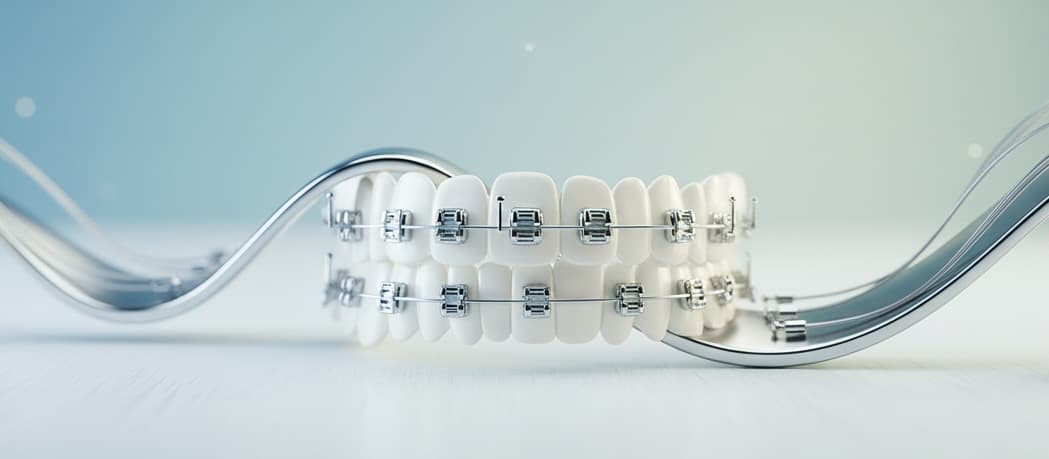
Traditional fixed braces, which use brackets and wires, are an active appliance designed to apply force to crooked or misaligned teeth to straighten and change their position. The process begins with preparing the teeth using a super adhesive resin cement material that allows metal or ceramic orthodontic brackets to bond firmly to each tooth. After the brackets are bonded, a specialized orthodontic wire is attached to them. This wire generates specific forces that guide each tooth into a more aligned and ideal position over time.
Traditional Braces Procedure
Indications
Traditional braces are the most versatile orthodontic treatment and can correct virtually any alignment issue. They're recommended for:
When to Consider Traditional Braces
Severe Crowding
Significant overlap of teeth when there isn't adequate space in the jaw.
Complex Bite Issues
Severe overbites, underbites, crossbites, or open bites that affect jaw function.
Significant Rotation
Teeth that are severely twisted or turned from their normal position.
Large Gaps
Extensive spacing between multiple teeth throughout the mouth.
Jaw Misalignment
Issues that require both tooth movement and jaw repositioning.
Note: While clear aligners work well for many cases, traditional braces remain the gold standard for complex orthodontic problems and typically work faster than other options.
Benefits
Why Choose Traditional Braces?
Most Effective
Can treat even the most complex orthodontic cases that other methods cannot address.
Precise Control
Allows the dentist to make exact adjustments for optimal tooth positioning.
Fixed in Place
No need to remember to wear them – braces work 24/7 without patient compliance concerns.
Faster Treatment
Often achieves results more quickly than removable aligners, especially for complex cases.
Cost-Effective
Generally less expensive than other orthodontic options while providing superior results.
Alternatives
Invisalign® Clear Aligners
Nearly invisible and removable, but only suitable for mild to moderate cases
Ceramic Braces
Tooth-colored brackets that are less noticeable but more fragile
Lingual Braces
Brackets placed behind teeth for complete invisibility but higher cost
Frequently Asked Questions
Related Services
Locations Offering Traditional Braces
Available at all Philadelphia Dental locations throughout Philadelphia
Schedule a Consultation
Ready to learn more about this treatment? Contact us today.
Book Appointment